Carrying Yesterday Into Today: How to Break Free From the Cluttered Board Cycle

Photo: teacher erasing chalkboard classroom preparing for new lesson, via www.telegraph.co.uk
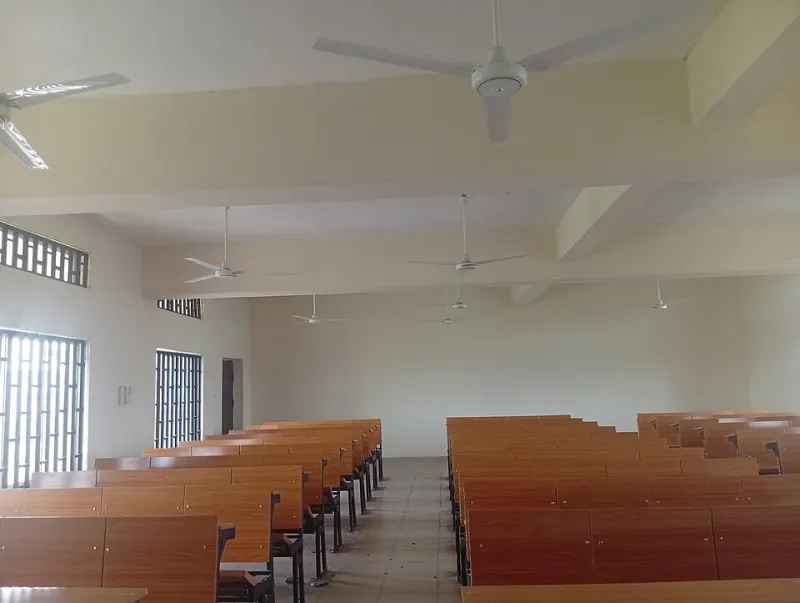
Walk into almost any American classroom between periods, and you are likely to find the same scene: a board that tells the story of the lesson that just ended. A fraction problem lingers in the upper-left corner. A vocabulary list from third period is only half-erased. A diagram that made perfect sense forty minutes ago now sits orphaned, without context, in the center of the space where today's new thinking is supposed to unfold.
This is the blank board problem — and it is far more consequential than it appears.
For many teachers, the cluttered board is simply a byproduct of a full schedule and a short passing period. There is rarely enough time between classes to wipe everything down, reflect on what should stay, and organize the space with intention. The result is that students arrive to a board that was designed for someone else's learning, and the day's new instruction begins in competition with yesterday's content.
Understanding why this happens — and what it quietly does to student cognition — is the foundation for changing it.
The Psychological Weight of a Cluttered Surface
Cognitive load theory, developed by educational psychologist John Sweller, holds that working memory has a finite capacity. When learners are presented with more information than they can actively process, their ability to absorb new material degrades. A board cluttered with irrelevant content from a prior lesson does not simply go unnoticed — it draws on the same limited cognitive resources students need to engage with what is being taught right now.
But the problem is not only cognitive. There is a psychological dimension as well. When students walk into a room and see a board that has not been reset, they receive a subtle but powerful message: this space was not prepared for them. The classroom environment communicates care and intention — or the absence of both. A thoughtfully cleared and organized board signals that the teacher has considered what today's learners will need. A cluttered one suggests that what came before is still more present than what is about to begin.
For students who already struggle with focus or anxiety — populations that represent a significant portion of many US classrooms — visual disorder on the board can function as a low-grade stressor before the lesson has even started.
Why Teachers Resist the Reset
If the costs of a cluttered board are real, why does the pattern persist? The answer lies in a combination of time pressure, habit, and — perhaps most interestingly — a well-intentioned reluctance to erase.
Many experienced teachers have internalized the idea that continuity matters. They worry that wiping the board clean signals a hard break from prior learning, when in fact they want students to carry previous knowledge forward into new material. The instinct to leave something on the board is not wrong — it reflects a genuine pedagogical instinct about connection and coherence. The problem arises when that instinct operates on autopilot, leaving behind content that was never consciously chosen to remain.
There is also the matter of transition time. In many schools, teachers have fewer than five minutes between classes. When those minutes are spent managing student dismissal, answering a lingering question, or simply catching their breath, the board reset falls to the bottom of the list. Over time, starting each lesson with whatever happened to survive the last one becomes the default — not a choice, but a habit formed in the absence of a better system.
The Difference Between Leaving and Keeping
The first conceptual shift teachers need to make is the distinction between content that was left on the board and content that was kept on the board. These may look identical, but they represent entirely different pedagogical stances.
Left content is accidental. It survived because no one made a decision about it. Kept content is deliberate — it was evaluated, chosen, and positioned with the next lesson in mind. A key formula that anchors an entire unit, a vocabulary term that will recur across multiple days, a question that is meant to remain open and generative: these are candidates for intentional retention. The half-finished class notes from second period are not.
Developing this distinction as a habit of mind is the core of effective board management. It transforms the reset from an act of erasure into an act of curation.
Practical Systems for the Board Reset
The following strategies are designed to work within the real constraints of a school day, not in spite of them.
The Two-Minute End-of-Class Protocol. Reserve the final two minutes of every class period not for new content, but for a deliberate board review. Ask yourself: What on this board should travel into the next lesson? What belongs only to this class? Erase what does not serve tomorrow. Frame what does. This ritual takes practice to establish but becomes nearly automatic within a few weeks.
The Anchor Corner. Designate one fixed section of your board — typically the upper-right or lower-left corner — as a permanent anchor zone. This space holds only content that is meant to persist across multiple lessons: a unit's essential question, a running vocabulary list, or a conceptual framework the class is building over time. Everything outside the anchor zone is fair game for the reset. Students quickly learn to read the anchor corner as the thread connecting lessons, which reduces the cognitive cost of transitions.
The Pre-Class Setup Habit. If your schedule allows even three minutes before students arrive, use them specifically for the board. Do not answer emails. Do not sort papers. Stand at the board, evaluate what is there, and make deliberate decisions. Teachers who build this habit consistently report that it changes not only their board but their mental readiness for the lesson itself. There is something clarifying about physically organizing the space where learning will happen.
The Student Reset Role. In some classroom cultures, particularly at the middle and high school levels, teachers have found success assigning a rotating "board keeper" role to students. This student is responsible for noting what should be preserved at the end of class and organizing the board before the next session begins. Beyond its practical utility, this role builds metacognitive awareness — students must think about what knowledge is worth carrying forward, which is itself a valuable learning task.
The Photograph Method. For teachers who worry about losing content that might be needed later, a simple photograph of the board before erasing eliminates that anxiety entirely. A quick snapshot taken on a phone or classroom tablet preserves anything that might be worth revisiting, freeing the teacher to reset the board without reservation.
Starting Fresh as a Teaching Philosophy
Ultimately, the blank board problem is not a logistical issue dressed up as a pedagogical one — it is the reverse. The logistical challenge of finding time to reset the board is real, but it persists in part because many teachers have not fully committed to the idea that a prepared, intentional board is worth the effort.
When teachers treat the board as a deliberate learning environment rather than a working surface, the reset becomes less of a chore and more of a practice. Each cleared space is an invitation — to students, to the day's content, and to the kind of focused attention that learning requires.
The board does not need to be blank to be ready. It needs to be chosen. And that distinction, small as it sounds, is where great teaching begins.