Presence Without Participation: Recognizing the Difference Between Students Who Are Watching and Students Who Are Learning
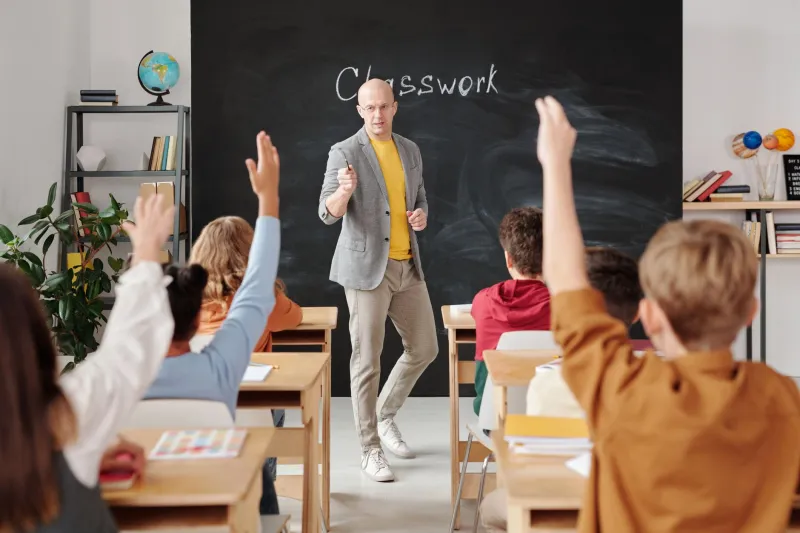
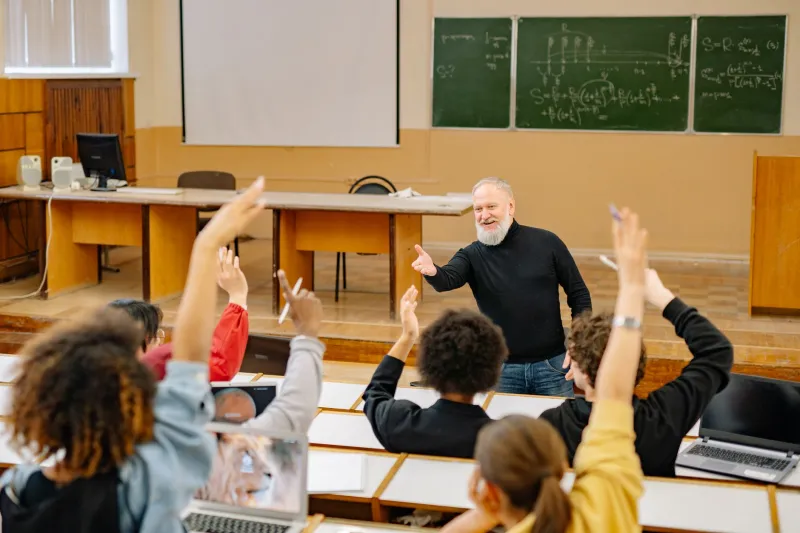
There is a particular kind of silence that can deceive even experienced teachers. Twenty-five students sit facing the board. Eyes are forward. Pencils are out. No one is talking. From the front of the room, it can look like a model lesson — the kind you might describe proudly in a professional development session. But silence and stillness, as any veteran educator knows, are not the same thing as understanding.
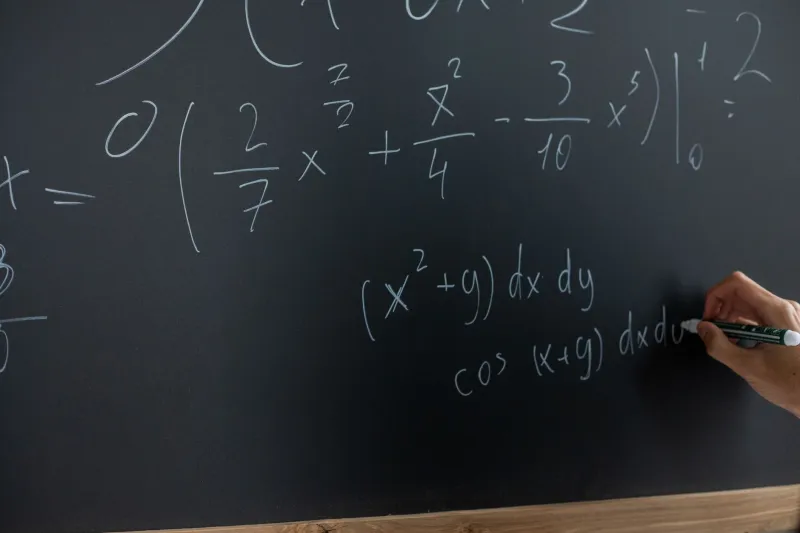
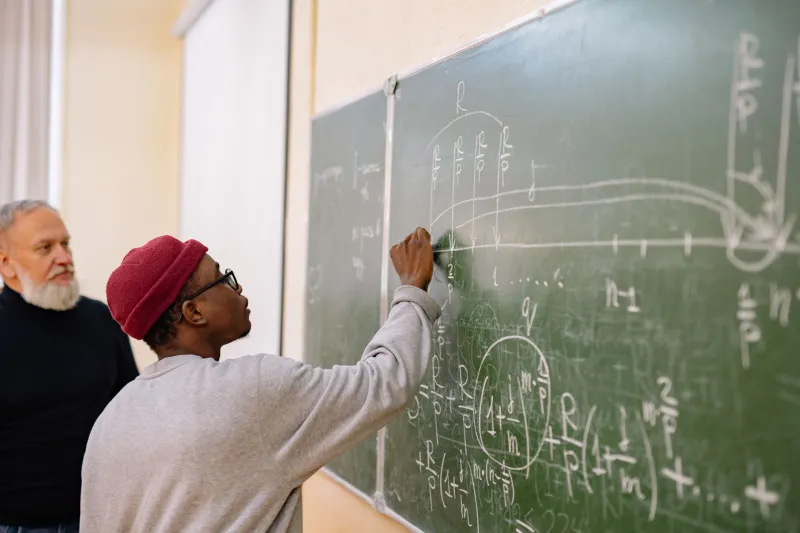
The blackboard is a powerful instructional tool precisely because it externalizes thinking. When used well, it invites students into a shared cognitive space where ideas are built, revised, and made visible. But that invitation is only effective if students are genuinely accepting it — not simply sitting in its presence.
Learning to read the difference is one of the most undervalued skills in teaching.
What Research Tells Us About Attention in the Classroom
Cognitive scientists have long distinguished between two modes of student attention: overt attention, which refers to observable behaviors like eye contact and body orientation, and covert attention, which describes internal mental engagement. The troubling reality is that overt attention is a notoriously poor proxy for the latter.
Studies on mind-wandering — particularly research conducted at institutions like Harvard and the University of California — have found that students' minds drift from the task at hand as often as 30 to 50 percent of the time during passive instructional experiences. Crucially, many of those students show no visible signs of disengagement. They are looking at the board. They may even be nodding. But their working memory has quietly departed.
This is not a character flaw. It is a neurological reality. The human brain is not designed for sustained passive reception. Without deliberate structures that require active processing, attention degrades — often invisibly.
The Behavioral Cues Worth Watching
While there is no foolproof formula for reading student cognition from across the room, certain behavioral patterns are reliably associated with genuine engagement versus passive observation.
Signs that suggest active processing:
- Students move their eyes between the board and their notes, rather than staring fixedly at one or the other
- Subtle physical responses — a slight lean forward, a furrowed brow, lips moving quietly — that suggest internal dialogue
- Spontaneous, low-stakes reactions: a quiet murmur of recognition, a glance at a neighbor as if to confirm something
- Students who hesitate before writing, suggesting they are selecting and evaluating rather than transcribing mechanically
Signs that warrant closer attention:
- Eyes fixed on the board without any corresponding note-taking or movement
- A room that is uniformly still and expressionless — engagement typically produces micro-variation in student behavior
- Students who write constantly and without pause, suggesting they are copying rather than comprehending
- A lag in response time when you pose a question, even a simple one, to the group
None of these signals are definitive on their own. But taken together, they form a picture that an attentive teacher can learn to read with increasing accuracy.
Why Board-Based Instruction Creates Particular Risk
The blackboard, for all its strengths, can inadvertently encourage passivity if teachers are not intentional about how they use it. When a teacher works through a complex explanation at the board — filling in steps, labeling diagrams, building an argument — the natural tendency for students is to watch. The board does the cognitive work visibly, and students can feel as though they are participating simply by observing.
This is sometimes called the fluency illusion: the experience of watching someone else perform a task smoothly and mistaking comprehension for competence. A student who watches a teacher solve an algebraic equation beautifully may feel, in the moment, that they understand the process. It is only when they attempt it independently that the gap becomes apparent.
Board-based instruction is not the problem. The absence of structured interaction with that instruction is.
Practical Strategies for Turning Watchers Into Thinkers
Interrupt the flow deliberately. Rather than presenting a complete explanation and then checking for understanding, build checkpoints into the board work itself. Stop mid-process and ask students to predict the next step before you write it. This small act shifts the cognitive load from reception to anticipation — a meaningfully different mental posture.
Use the board to pose, not just explain. Leave a step incomplete. Write a question rather than an answer. Sketch a diagram and ask students to identify what is missing. When the board presents a problem rather than a solution, it becomes a prompt for thinking rather than a surface to copy from.
Call for written responses before verbal ones. When checking comprehension, ask students to write their answer or reaction before anyone speaks aloud. This prevents the common dynamic in which a few confident voices create the impression of whole-class understanding. Every student processes independently before the group coalesces around a shared response.
Scan deliberately, not casually. Many teachers glance around the room while writing on the board. Deliberate scanning is different. It means periodically pausing, turning fully to face the class, and spending fifteen to twenty seconds reading the room systematically — not looking for raised hands, but looking for the behavioral signatures described above.
Narrate your own uncertainty. When teachers think aloud at the board — genuinely wrestling with a problem rather than performing a polished solution — students tend to re-engage. Authentic cognitive effort is more compelling than a flawless demonstration. A teacher who says, "Wait — I'm not sure that's right, let me reconsider," activates student attention in a way that a smooth, error-free explanation often does not.
Adjusting on the Fly: What to Do When You Sense the Room Has Left You
Even with the best preparation, there are moments when the energy in the room shifts and the teacher can feel — if not quite see — that students have mentally departed. Having a repertoire of low-disruption reset strategies is essential.
A brief turn-and-talk, timed to ninety seconds, can recalibrate a drifting room without derailing the lesson. A cold call framed as an invitation rather than a test — "Marcus, I'm curious what you're making of this so far" — signals that the teacher is present and attentive without creating anxiety. Sometimes simply moving away from the board and into the room shifts the spatial dynamic enough to recapture attention.
The goal is not to perform engagement checks in a way that feels punitive or surveillance-like. It is to create a classroom culture in which active thinking is the expected norm, and the board is understood as a starting point for that thinking — not a substitute for it.
The Teacher as Reader of the Room
The most effective board-based instruction is, at its core, a dialogue — even when only one person is writing. What gets marked on the board should be responsive to what teachers observe in their students, and what students observe on the board should require something of them in return.
Learning to distinguish genuine engagement from its convincing imitation is not a skill that develops overnight. It requires practice, honest self-assessment, and a willingness to redesign instruction when the evidence suggests it is not landing. But teachers who develop this capacity — who can read a room the way a skilled reader reads a page — are the ones whose board work genuinely reaches students, rather than simply passing before their eyes.