When the Board Stops Asking: Restoring the Art of Inquiry to Your Classroom Space
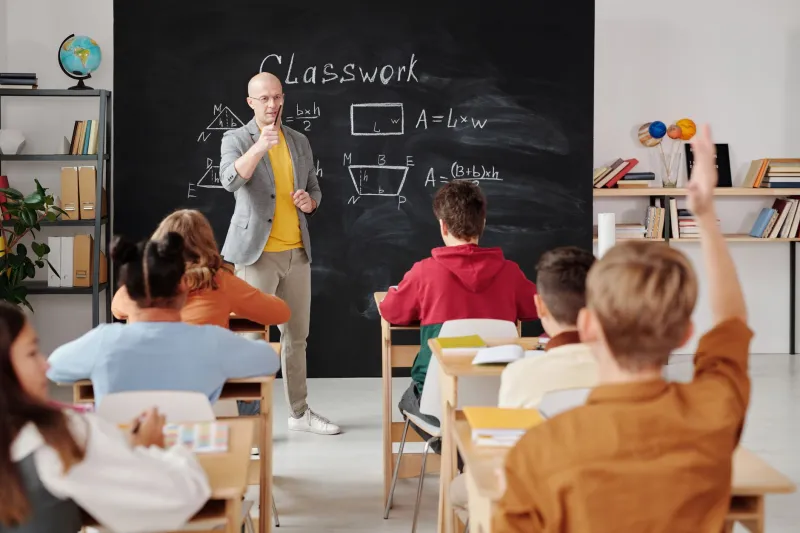
There is a moment in many teaching careers — subtle enough that most educators never notice it — when the blackboard stops being a place of questions and becomes a place of conclusions. Definitions appear. Formulas are recorded. Timelines are drawn. The board fills with things that are known, and somewhere in that accumulation, the things that are not yet known quietly disappear.
This is not laziness. It is not poor pedagogy born of indifference. It is, in many cases, the natural result of experience. Teachers who have spent years in a classroom develop fluency with their subject matter, and that fluency can subtly close off the very uncertainty that once made their instruction dynamic. When you know where a lesson is going, it becomes increasingly difficult to perform the act of not knowing — and genuine inquiry, the kind that drives intellectual growth in students, depends on that not-knowing being visible and valued.
The question worth examining is this: what does your board reveal about how you understand the purpose of classroom space?
From Inquiry to Declaration: How the Shift Happens
Research in educational psychology has long established that classrooms oriented around questions produce deeper learning than those organized around answer delivery. Yet the drift toward declarative instruction is remarkably common, and it accelerates under pressure. When pacing guides tighten, when standardized assessments loom, when thirty students need to cover material in forty-five minutes, the open-ended question begins to feel like a luxury. Teachers condense. They streamline. They write the answer on the board before the question has had time to breathe.
The blackboard, in this context, becomes a transcript of what the teacher already knows rather than a record of what the class is discovering together. Students read it accordingly. They copy it down, they photograph it, and they treat it as content to be consumed rather than territory to be explored. The intellectual posture the board encourages is passive reception, not active inquiry.
This is a significant loss — not because declarative instruction is without value, but because a classroom that never surfaces unresolved questions teaches students something troubling about the nature of knowledge itself: that it arrives complete, from the front of the room, and that uncertainty is a problem to be eliminated rather than a condition to be inhabited productively.
What Unanswered Questions Signal to Students
Consider what it communicates to a student when a teacher writes a question on the board — and then deliberately does not answer it.
At first, many students experience mild discomfort. American classroom culture, shaped by decades of standardized testing and answer-oriented instruction, has conditioned students to expect resolution. A question without an answer can feel like an error, a gap, something that will be corrected momentarily. But when a teacher makes clear that the question will remain on the board — that it is being preserved, not overlooked — something shifts. The unanswered question becomes a signal that uncertainty has a legitimate place in the room.
This is not a small thing. Students who learn to sit with unresolved questions develop greater cognitive flexibility, stronger metacognitive habits, and a more accurate understanding of how knowledge actually works across disciplines. In science, in history, in literature, in mathematics — genuine inquiry is rarely tidy. The classroom that reflects that reality prepares students far better than one that presents knowledge as a series of settled facts.
Practical Strategies for Reclaiming Inquiry on the Board
Designate a Permanent Question Zone
One of the most effective structural interventions a teacher can make is to reserve a consistent section of the board exclusively for questions — not rhetorical questions designed to lead students toward a predetermined answer, but genuine questions that the lesson has surfaced and not yet resolved. Label this space clearly. Return to it regularly. Let students see that questions accumulate there across days and weeks, and that some of them persist because the subject matter is genuinely complex.
This spatial commitment does something that verbal encouragement alone cannot: it makes the value of inquiry visible. When students see that questions occupy permanent real estate on the board, they receive an architectural message about what this classroom considers important.
Capture Student Questions in Real Time
Many teachers field student questions verbally and move on, which means those questions evaporate from the room's collective memory within minutes. A more powerful practice is to write student questions on the board at the moment they are asked — not to answer them immediately, but to honor them as contributions worth preserving.
This practice accomplishes several things simultaneously. It validates the student who asked, communicating that their uncertainty is a legitimate intellectual offering. It signals to other students that asking questions is a valued form of participation. And it builds a visible record of the class's collective curiosity, which a teacher can draw on to shape future lessons in ways that feel genuinely responsive to student thinking.
Use the Board to Model Your Own Uncertainty
One of the most disarming things a teacher can do is write their own unresolved questions on the board — questions about the subject matter that they find genuinely interesting or unresolved, questions about how a concept connects to something else, questions that the lesson has raised for them in the moment. This is not a performance of false ignorance. It is an honest representation of how expert thinkers actually engage with complex material.
When students observe a knowledgeable adult treating their own uncertainty as intellectually interesting rather than professionally embarrassing, it fundamentally reframes what learning looks like. The board becomes evidence that inquiry is not a beginner's activity — it is how serious thinkers work.
Let Questions Drive the Next Lesson
At the end of a class period, rather than erasing everything and beginning fresh the next day, consider leaving one or two unresolved questions visible when students return. Open the following lesson by returning to those questions before introducing new material. This practice does more than reinforce continuity — it demonstrates that classroom inquiry has consequences, that the questions students and teachers raise together actually shape the direction of instruction.
This is among the most powerful messages a teacher can send: your questions matter enough to change what we do tomorrow.
The Board as a Map of Thinking, Not a Record of Answers
The blackboard, at its most effective, is not a surface for recording what is already known. It is a map of how a class is thinking — where the understanding is solid, where it is uncertain, where the terrain is still being explored. When teachers allow the board to reflect only conclusions, they flatten that map into something far less useful.
Reclaiming inquiry in the classroom does not require dismantling everything that works. It requires a willingness to let the board hold questions alongside answers, to treat unresolved thinking as content worth displaying, and to resist the institutional pressure to make knowledge appear neater than it actually is.
The teachers who do this well are not the ones who have the fewest answers. They are the ones who have learned to value questions enough to give them a permanent place on the board — and in doing so, teach their students that the most interesting intellectual territory is almost always the space where certainty has not yet arrived.